INSTALLATION: THIS WAS ONCE A FOREST, THIS WAS ONCE A SEA (2025-6)
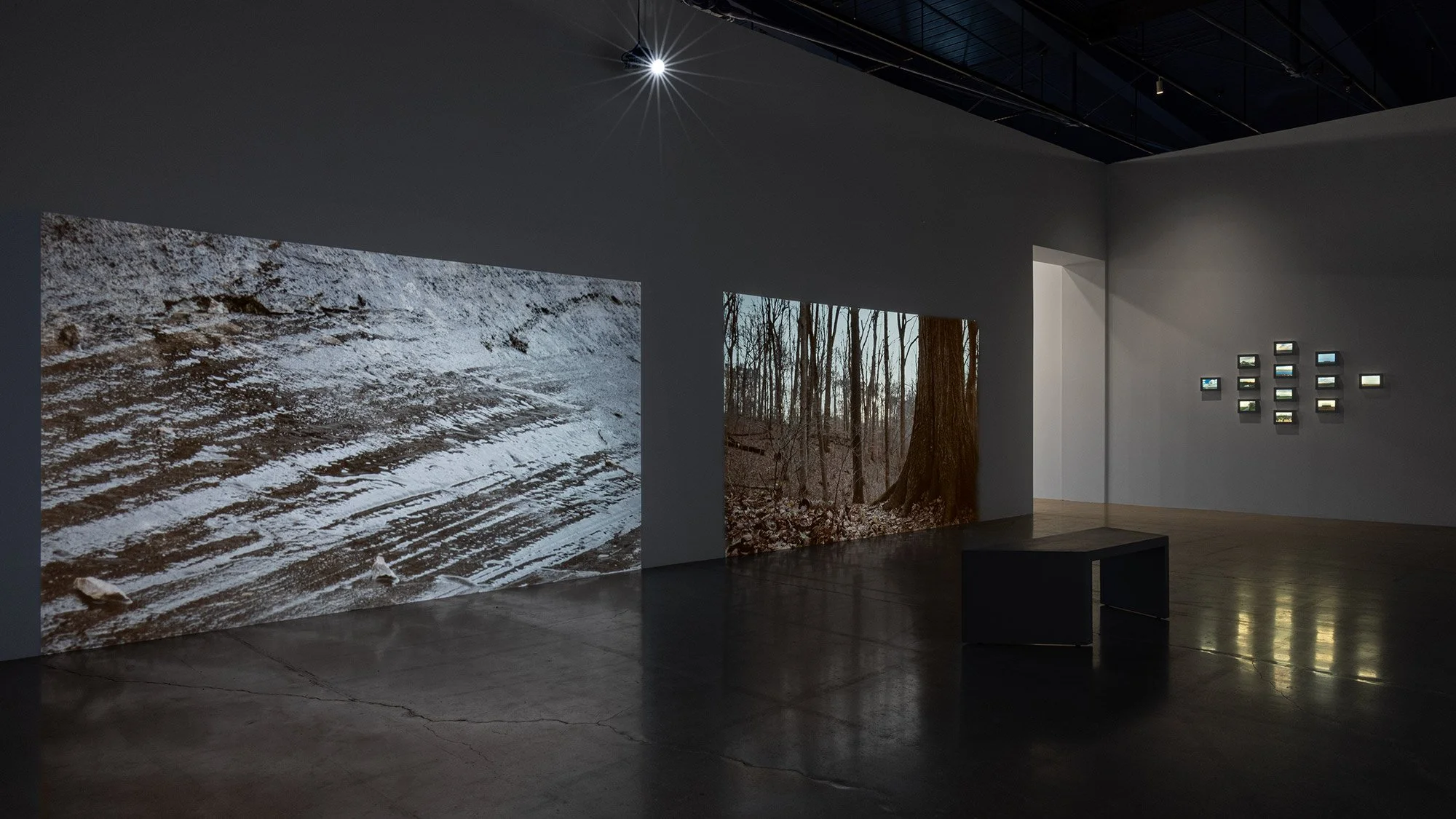
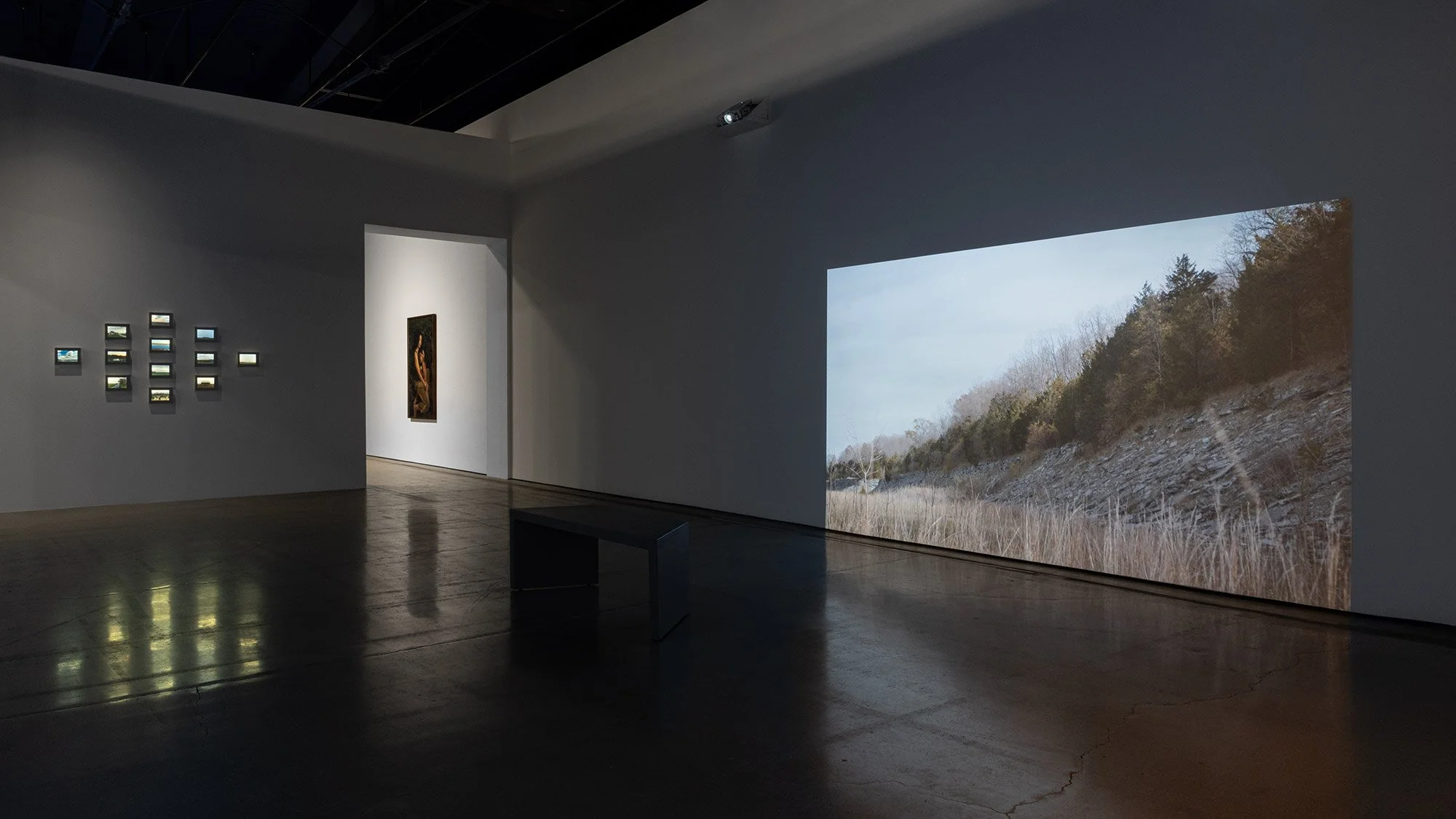
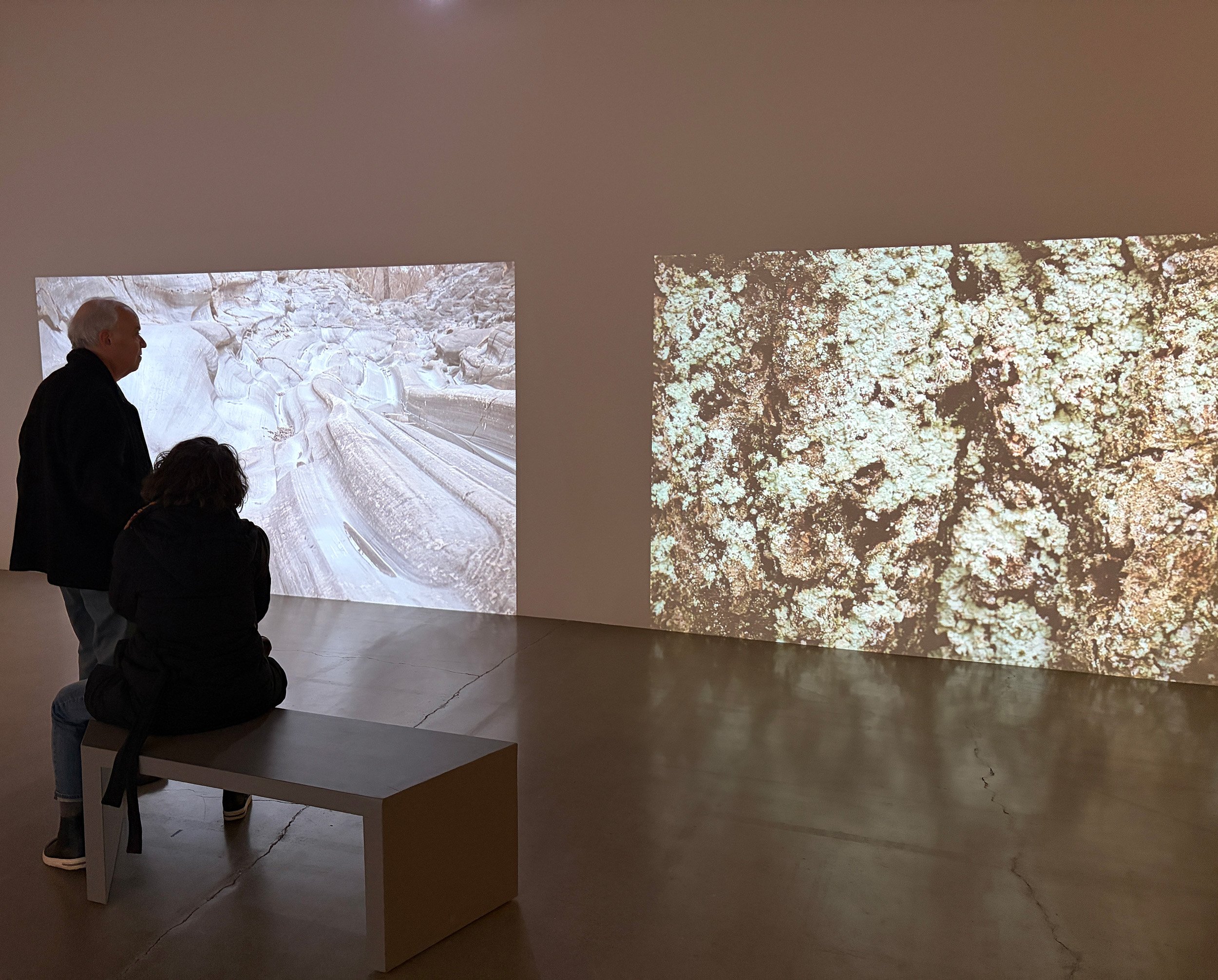


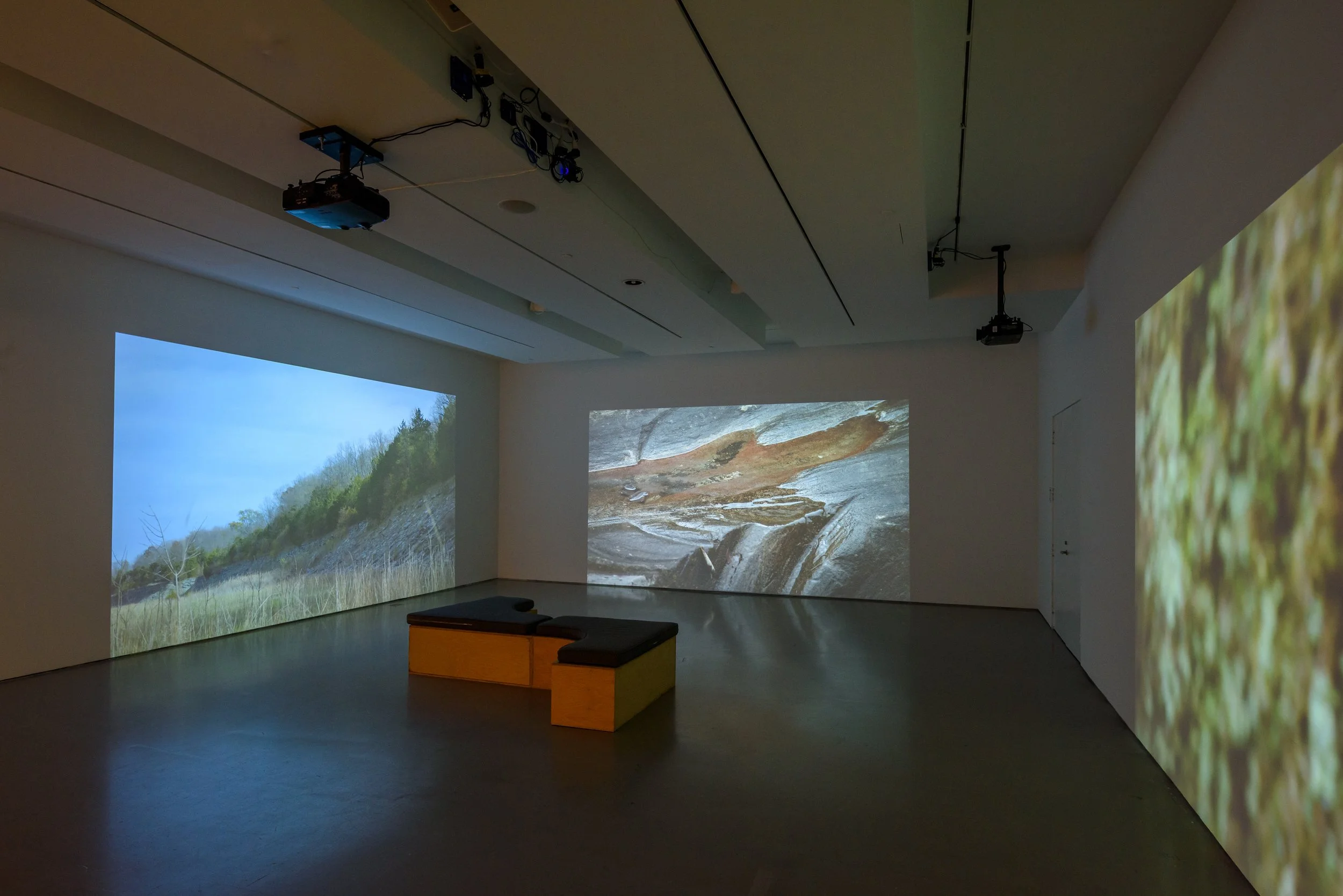

THIS WAS ONCE A FOREST, THIS WAS ONCE A SEA (11:00 minute installation; 4 channel audio, 3 channel video), is a reminder of the long history of Ohio’s land, from old growth forests in the nineteenth century to an ancient, 250 million year-old ocean. The video shares close-up images of a fossilized ocean bed (from Caesar Creek State Park), the contours of a glacial groove (on Kelleys Island in Lake Erie), and the base of a centuries-old oak tree (at Davey Woods State Nature Preserve). The audio features field recordings of water, wind, scraping, and the internal sounds of trees, whose white noise, creaking, and swaying are at once ghostly and uncannily aquatic. Together, these fossils, stones, and trees are a natural archive, operating on a different time scale from our human experiences. Up-close, they offer a new way of understanding the places where we live, and quietly prompt us to act as stewards to the land.
This Was Once a Forest was commissioned by the Contemporary Arts Center Cincinnati (May-September, 2025) and the Museum of Contemporary Art (MOCA) Cleveland (January 30-August 2, 2026). The video below is a short excerpt of the larger project, and reduced to a single screen and stereo recording.
PERFORMANCE: THE HOUSE (2025)
THE HOUSE (10:00 minutes; string quartet, field recordings, sampled piano, and video), funded with a Greater Columbus Arts Council Artist Project Grant, features field recordings of my parents’ house, made shortly before it was sold in 2024. This piece methodically moves from room to room, listening to the sounds of doors, light switches, hallways, steps, drawers, glasses, closets, and the old family piano. What emerges is a portrait of the house, rich with the memory, dreams, and imagination of a family home. This piece is part of a larger “family portraits” series, which features music and films about different members of my immediate family and ancestors.
The accompanying film is a series of nearly 200 family slides, each featuring the house’s interior or exterior. The slides move by at a fast pace, creating a visceral reaction to the quickly passing seasons and years. We are left with fleeting impressions of the constantly evolving family and house. Together, the sounds, music, and images depict a very specific family and story, and yet they open this story up to something bigger. Through the particular, we are able to witness the patterns and rhythms of family life, and catch a glimpse of our shared humanity.
PERFORMANCE: THE WORKBENCH (2023)
THE WORKBENCH (11:30 minutes; bass clarinet, piano, violin, cello, samples, video, commissioned by the Unheard-Of Ensemble and the Johnstone Fund for New Music) is a sonic portrait of my father. The piece is a personal reflection on time, filial connections, life and death, and the power of inherited objects. The music of The Workbench is both elegiac and curious, slowly building momentum over a dozen minutes. Throughout, we hear voicemails from my father, where his everyday questions and statements become both poignant and poetic. At times, we hear recordings of some of the repaired objects: ticking watches, radio static, and a slowly turning music box. At the end, a recording of my father calmly sleeping and breathing in hospice is raw, intimate, and dignified. It lends gravity to the piece, and is both shocking and perfectly ordinary, too.
PERFORMANCE: WORDS AND SILENCES (2022)
WORDS AND SILENCES (50 minutes; flute, alto/bari saxophone, bass clarinet, trumpet, trombone, piano, samples, video, commissioned by the Wexner Center for the Arts) is a portrait of Trappist monk Thomas Merton (1915-68). Using Merton’s own recordings, it explores his innermost thoughts and philosophy. The resulting archival recordings—from thoughts on Michel Foucault to the 1967 Louisville racial protests—are presented alongside newly composed music.
In “Sound of an Unperplexed Wren” Merton records the sounds around him, and talks of Samuel Beckett. Merton uses the recorder both as a contemplative tool and as a means to discover his interior voice.
INSTALLATION: OHIO IMPRINT (2023)
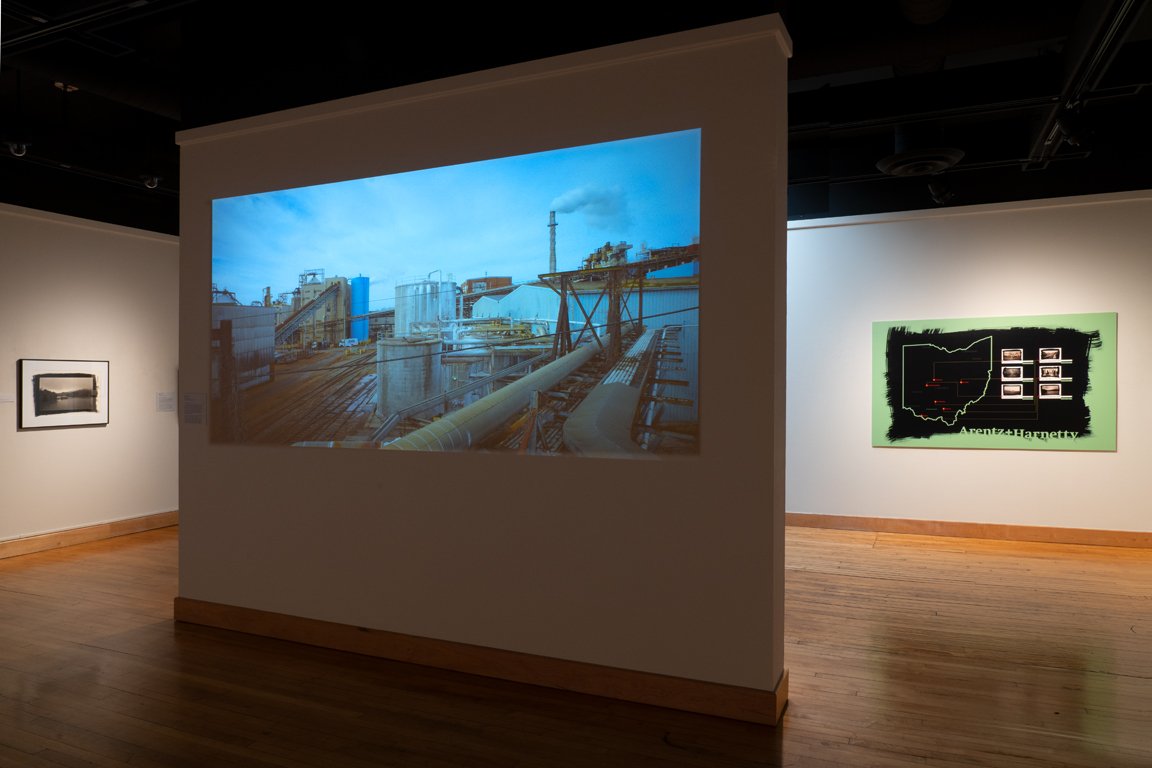
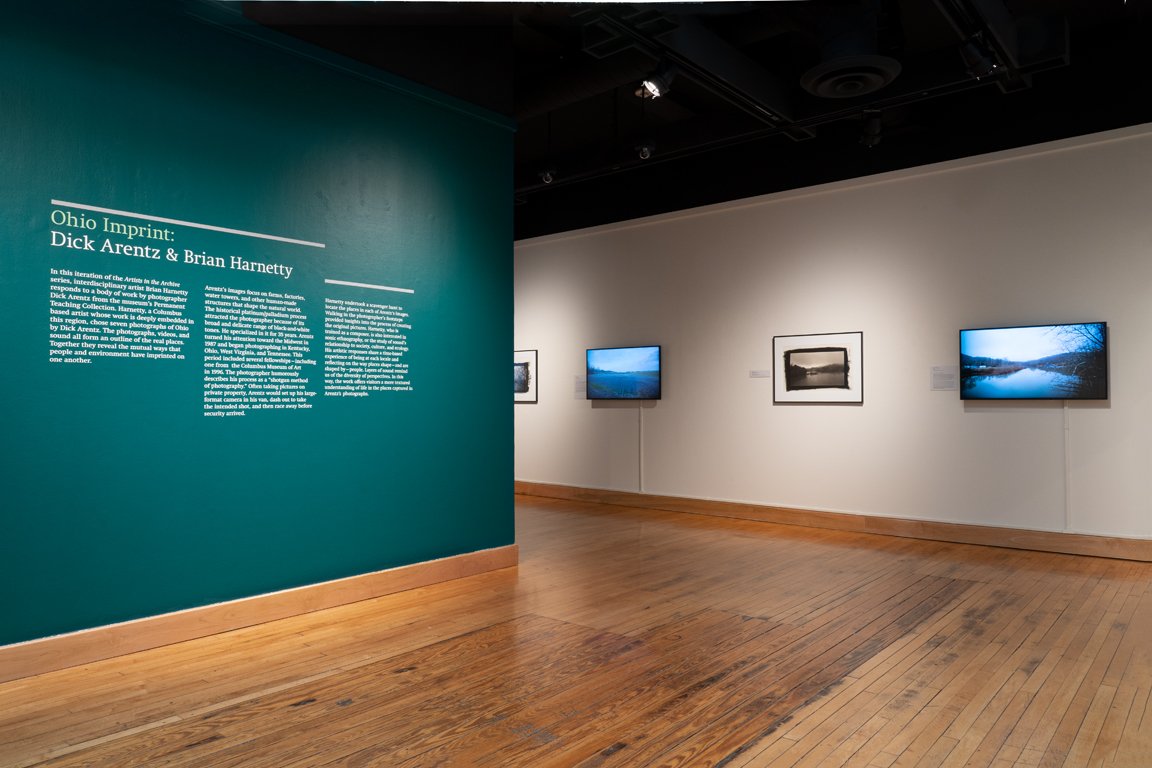
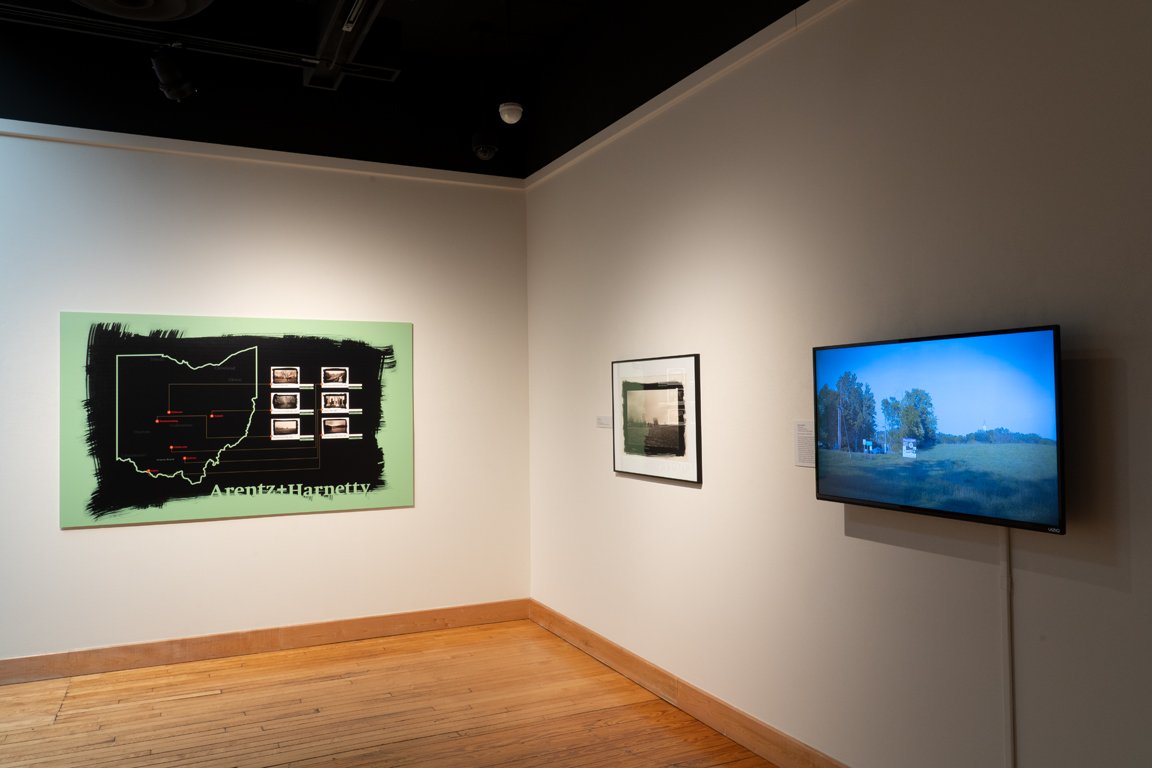
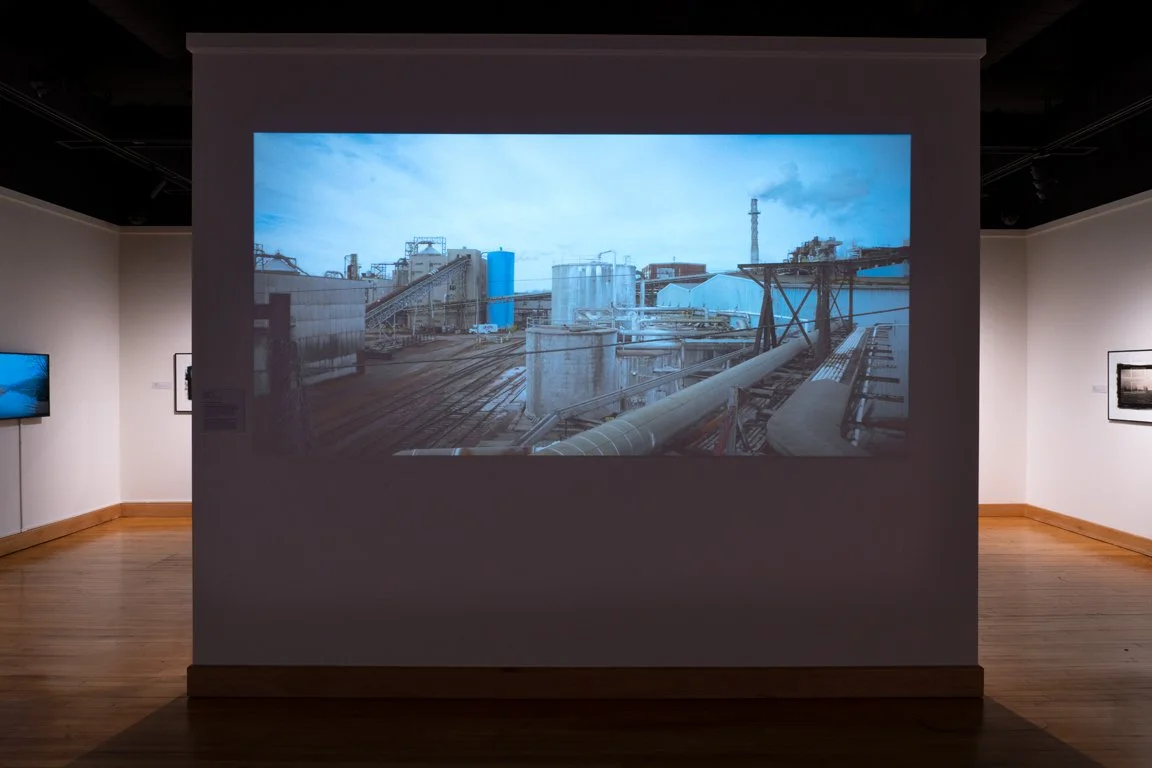
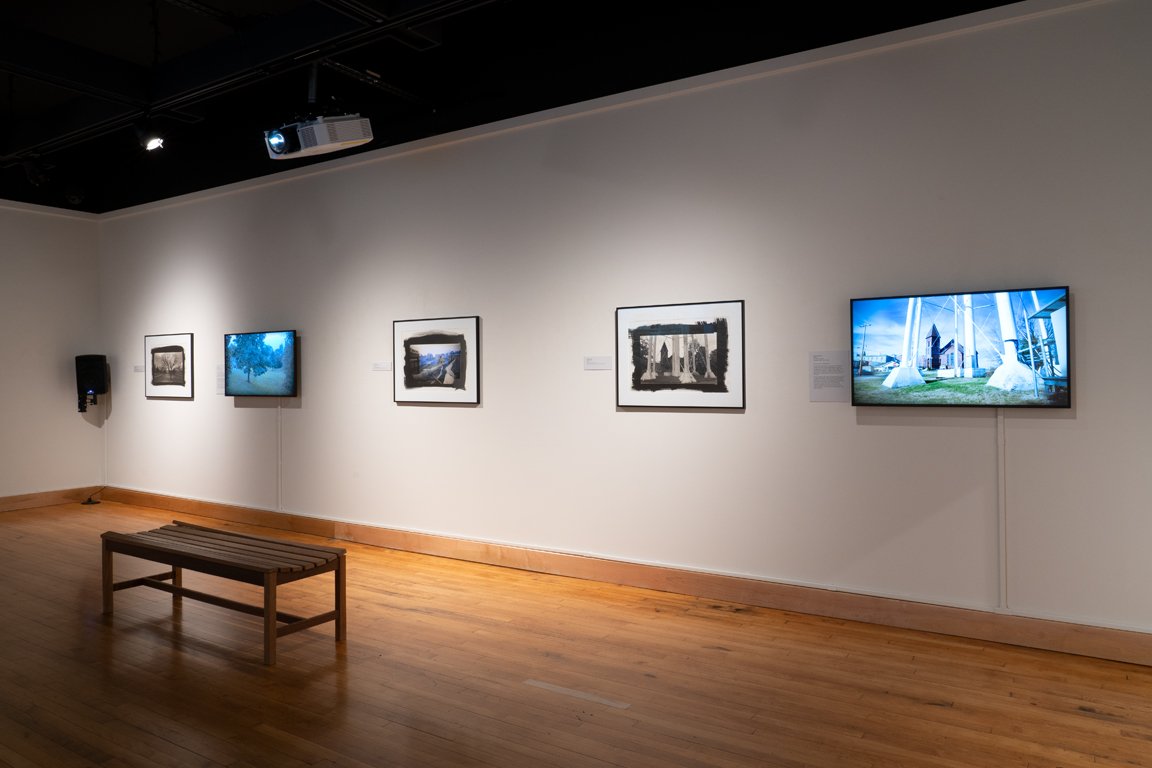
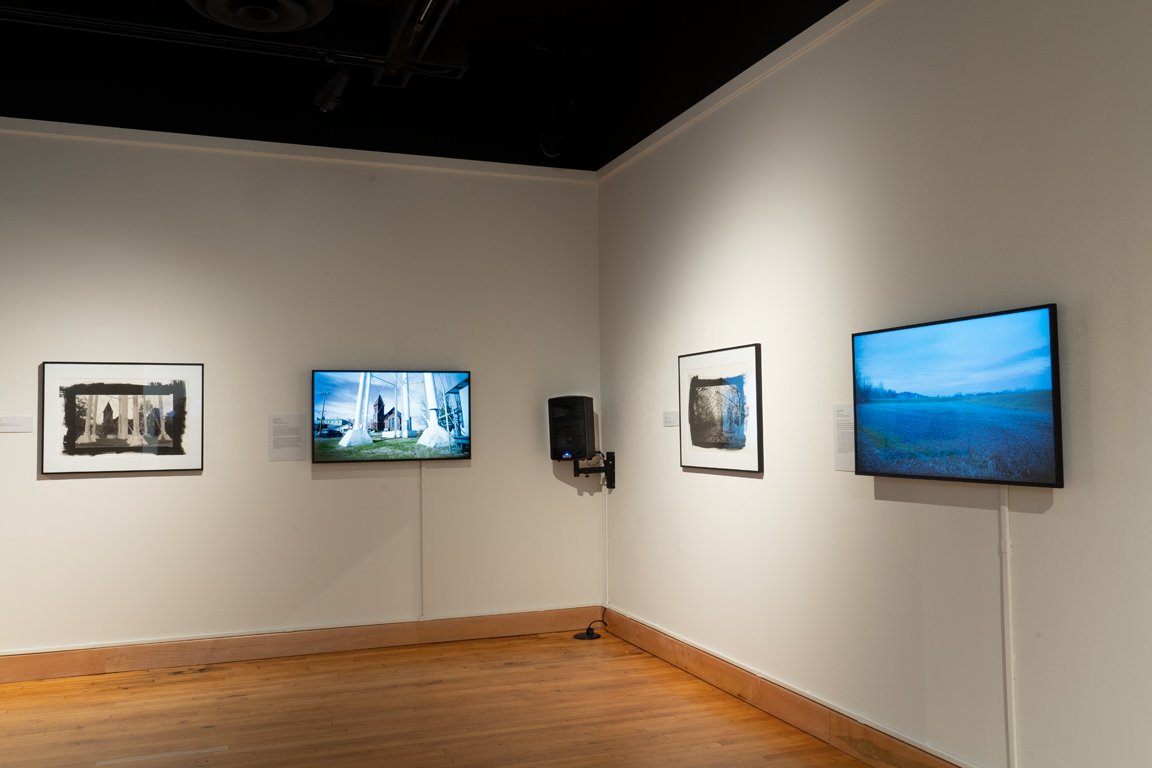
OHIO IMPRINT (7-channel video, 2-channel audio, commissioned by the Ross Museum of Art at Ohio Wesleyan University). In the fall of 2022, I re-traced the footsteps of photographer Dick Arentz (b. 1935) throughout central and southeastern Ohio. I found the precise locations of seven of Arentz’s photos, in the towns of Mechanicsburg, Delaware, Chillicothe, Jackson, Ripley, Tyndall, and the Serpent Mound in Peebles. In each location, I made field recordings and recorded several minutes of video. The goal was to understand these places in new ways, to see them through Arentz’s eyes, and to experience what was happening beyond the photograph. As the project unfolded, I began to realize that the “imprint” implied in the project’s title is not only the marks made on photosensitive materials or on digital audio and video, but also the impression each place made on me. I was subjectively experiencing each place in context. The exhibit consists of seven videos (corresponding with the Arentz photographs) and a soundtrack of collaged field recordings made at each location.
PERFORMANCE: SHAWNEE, OHIO (2016, rev. 2021)
SHAWNEE, OHIO (60 minutes; flute, alto/bari saxophone, bass clarinet, piano, string quartet, samples, archival film, video, commissioned by the Wexner Center for the Arts, Duke Performances, and Contemporary Arts Cincinnati) is eleven audiovisual portraits of people from a small Appalachian mining town. Built on a decade of ethnographic research, it uses archival recordings, video, and images alongside newly composed music to critically explore issues of extraction, economy, and ecology in the region.
“Boy” brings together authentic Appalachian banjo and contemporary ensemble, and features an archival recording of a child interviewing his grandmother about coal mining, and miners who died. The recording is ghostlike: the boy places the recorder too far away from the grandmother and we hear questions, but no answers.
INSTALLATION/PERFORMANCE/SOCIAL ENGAGEMENT: FOREST LISTENING ROOMS (2018 - present)
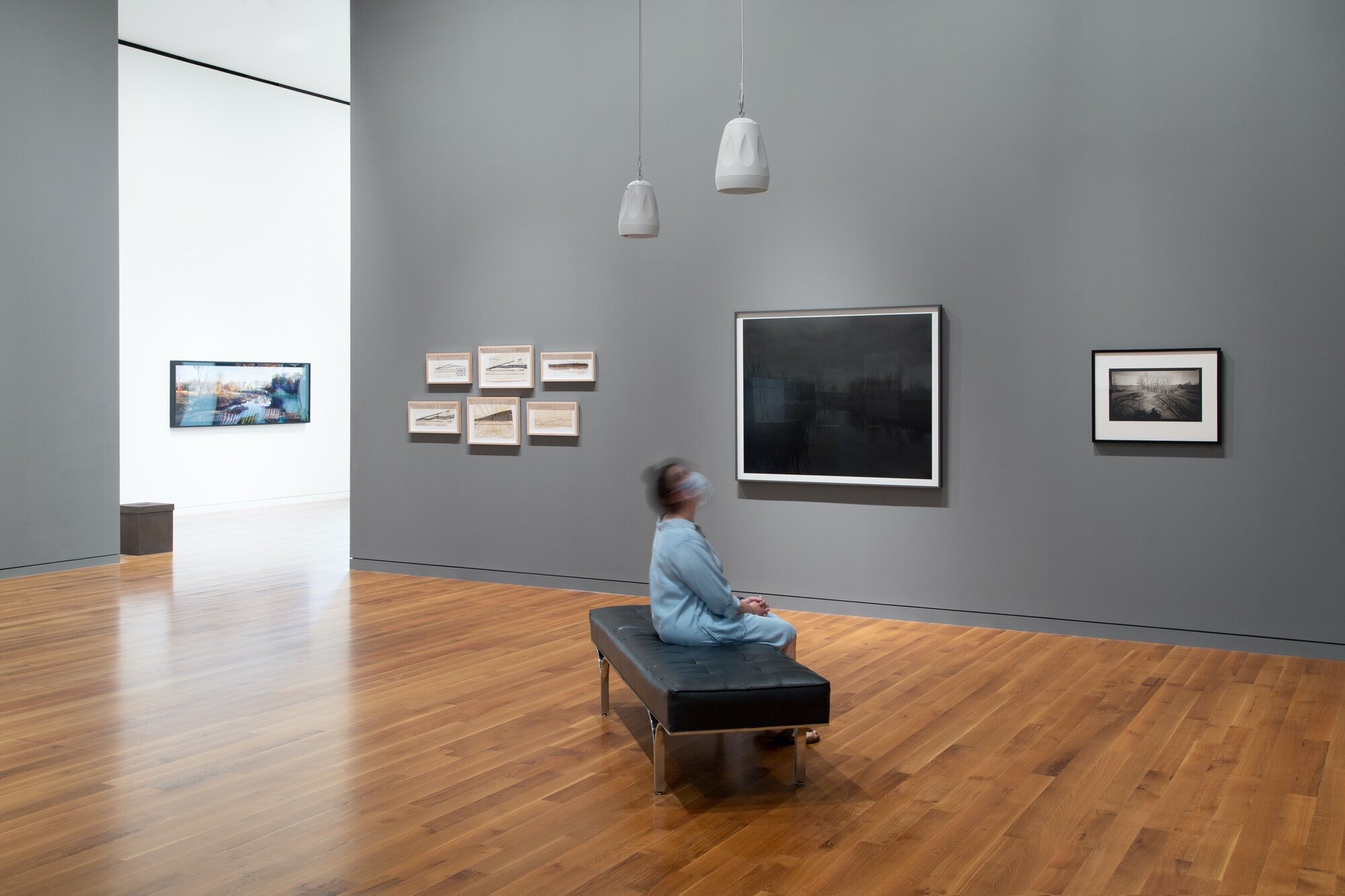

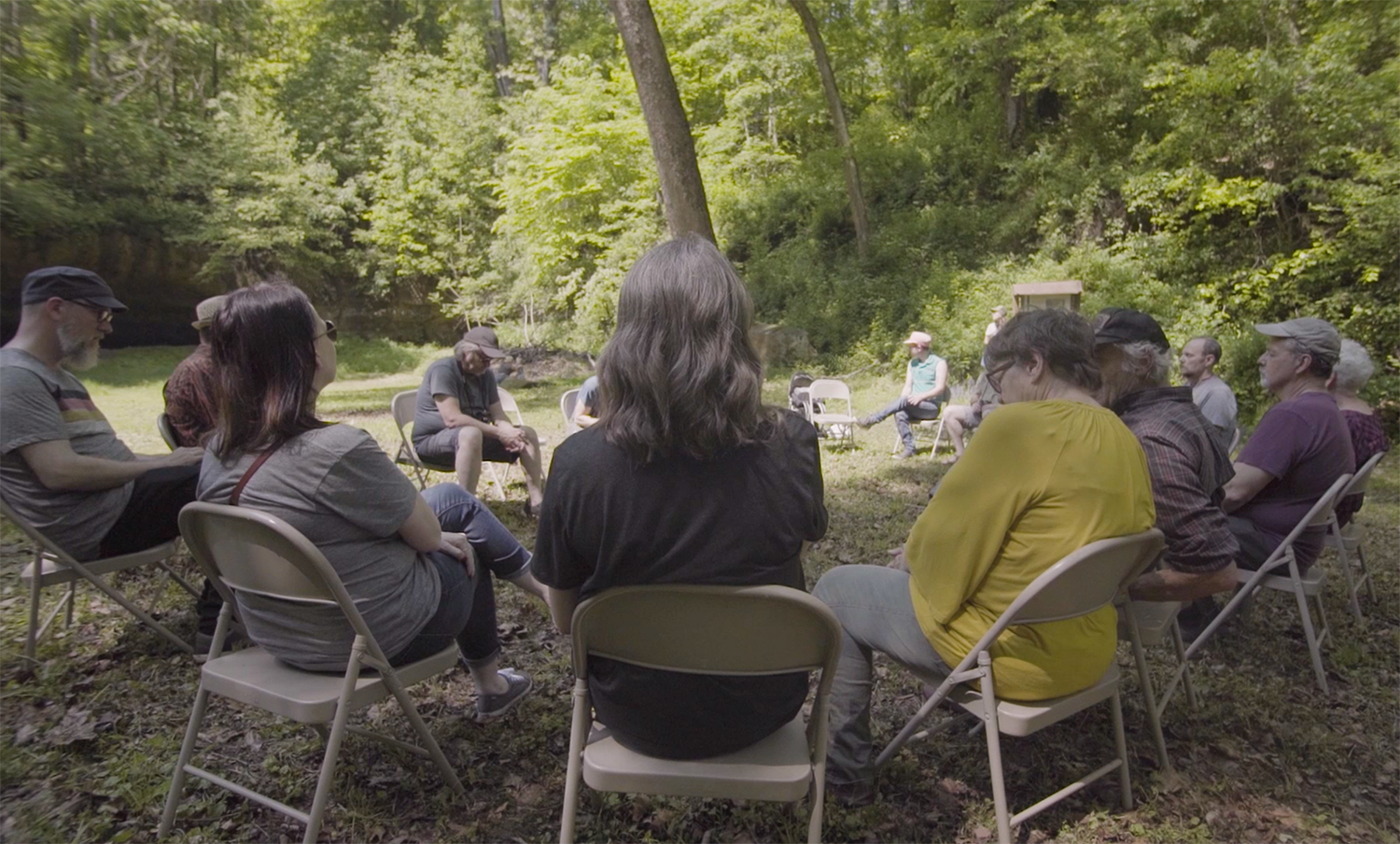


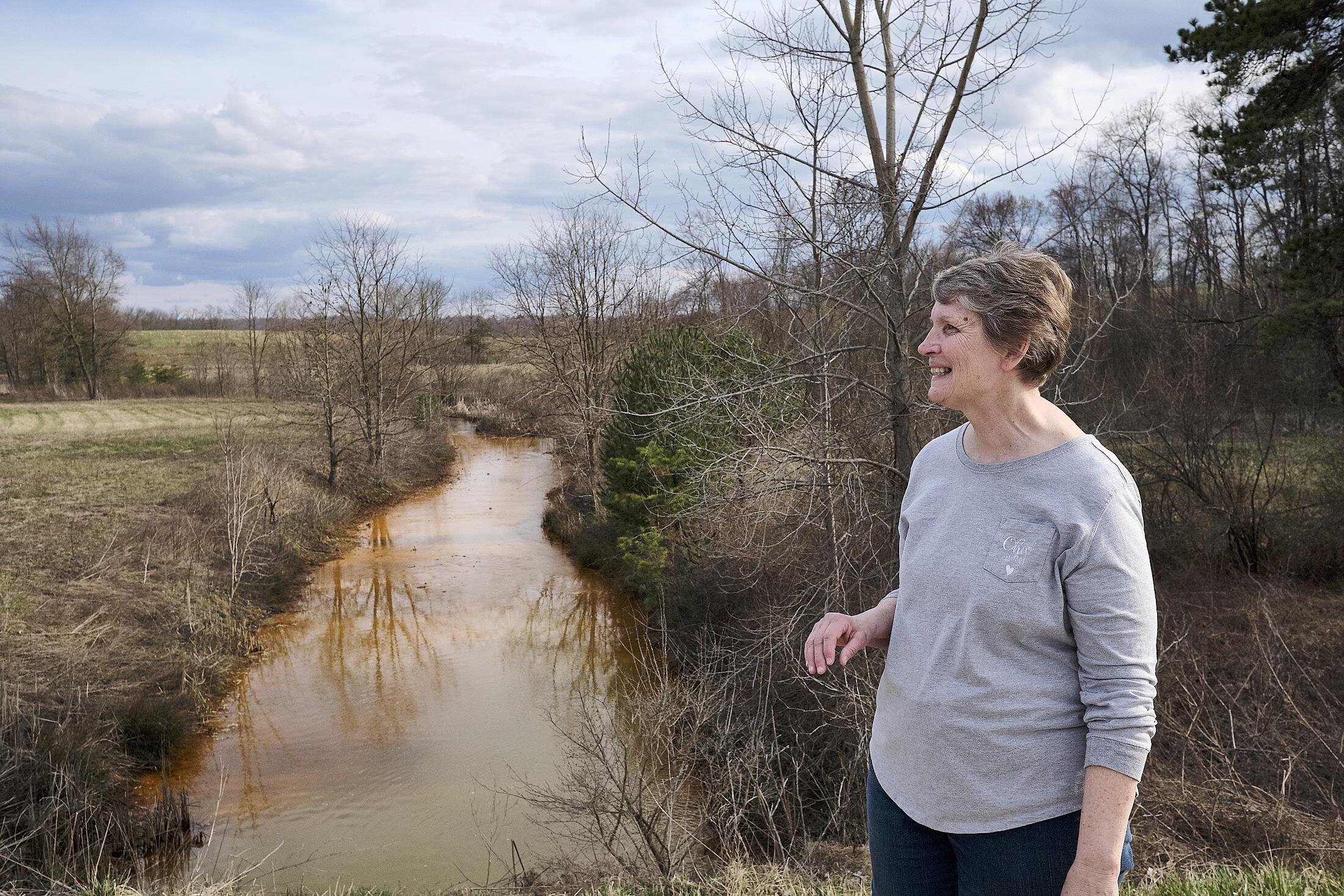


FOREST LISTENING ROOMS (flute, bass clarinet, also saxophone, piano, string quartet, samples, funded through an A Blade of Grass Fellowship in Socially Engaged Art) is a socially engaged sound, performance, and video project in the Wayne National Forest in Appalachian Ohio (USA). After the brutal removal of the Shawnee tribe in the early nineteenth century, the region has undergone two centuries of fossil fuel extraction, environmental degradation, and economic booms and busts. The project invites local communities to gather in outdoor spaces and critically listen to the forest, archival recordings of past residents, sounds of extraction, and to each other. Forest Listening Rooms contends that listening to the forest’s past and present can transform its future. Its goals are to understand differences between rural and urban communities, foster a sense of stewardship toward land use, and end hydraulic fracturing (“fracking”) on the forest’s contested public lands.
Forest Listening Rooms consists of dozens of iterations, ongoing since 2018. There is no single “performance” of the piece; instead, it is comprised of many experiences of listening followed by shared conversation, and is focused on land use, environmental issues, and the rural/urban divide. No two listening sessions are the same, as evinced by the documented examples below, which include children, hunters, all terrain-vehicle riders, environmental activists, concerned residents, oil drillers, community organizers, and local historians. Finally, the main audiences of Forest Listening Rooms are the local residents that live in Appalachian Ohio, and it is their experiences of listening that are the central components of the project.
INSTALLATION: SHAWNEE REVISITED (2018)
SHAWNEE REVISITED (3-channel video, 2-channel audio, 22 minute loop, commissioned by Carleton College’s Weitz Center for Creativity, Minnesota) is a counterpart to the album and music performance Shawnee, Ohio. Both projects evoke the sonic and visual world of the town, and Shawnee Revisited remixes the same material to make an environment of stillness and movement, where present and past bleed into one another. Here, participants can address, imagine, and enact a new future for Shawnee and rural communities across the country.
In this three channel video, viewers experience contemporary footage of Shawnee: quiet streets, a local opera house, and still interiors that invite slowness and contemplation. The images appear to be photographs, yet when more time is spent with them, more is seen: trees gently sway, summer heat radiates through the air, a cobweb waves in the wind, a flag moves, a sign reflects sunlight.
The images are met with sudden transitions into the past, creating a slowly unfolding montage between contemporary video and archival and home movies. Stop the motion of this archival footage at any point and a world of visual noise, sunbursts, cracks, and film deterioration is revealed; the film’s own history is recorded alongside the people and places it depicts.
On the two side screens, seasons transition –– of landscapes, parades, portraits, and social life –– while mining remains ever-present in-between. The earliest footage is of miners exiting from their underground work (reminiscent of the Lumière brothers’ famous films of workers leaving a factory), and of their carbide-lighted hats slowly dancing in the darkened mines. Above ground, children move in parallel motion to the miners, parading down Main Street for Halloween or the Fourth of July or Memorial Day: side-by-side rituals marking the change of time, the environmental and economic costs of extraction, the entwined patterns and rhythms of culture and labor.
Throughout, sound unfolds as a background of instrumental long tones, gradually shifting and evoking the always present forest, surrounding Shawnee and nearby towns. Some of these sounds were recorded in the very places that viewers see in the Shawnee footage, further blurring past and present. We also hear the voices of local residents, speaking and singing of work, friendship, disaster, and death. Together, these voices and sounds create a sonic world that places past and present together, offering ways to move into the future.
INSTALLATION: TO HOLD, TO KEEP (2016)
TO HOLD, TO KEEP (3-Channel video with field recordings, 8 minute 17 second loop, Commissioned by the Massillon Museum of Art, Massillon, Ohio) centers on the reservoir of Sippo Creek in Massillon, Ohio. It asks how the reservoir was used in the past and continues to be used today. It is also a series of visual and aural portraits of people connected to the reservoir and its water. The piece draws from archival films of Charles and Lucy Myers (made from 1938-40), and contemporary field recordings.
The origin of the word “reservoir” comes from the French word réserver, “to reserve, to hold, to keep.” The reservoir collects and stores water. But the water does not stop completely. Instead, the reservoir slows the water’s movement, carrying water as it continues on, through and under the city. It seems static, yet is always moving.
The archival films are directly connected to Massillon’s places (the reservoir, the city) and to its people. They hold the past, inviting memory and recollection. The films are also reminders of how these places and people are continuously changing across seasons and years. These images also show water in its three chemical states: liquid, ice, and steam. Young women swim and boat, children are pulled in a sled across the reservoir’s frozen surface, and firefighters spray water into clouds of smoke and steam. Faces pass by, quickly, with expressions of joy, curiosity, concentration, playfulness, concern. We read these faces but cannot quite grasp them. We recognize, but cannot hold.
The sound recordings follow the flow of water from the reservoir down to the Sippo Creek below. They are from 2016, nearly 80 years after the films. They offer a contemporary counterpart to the films, and hang on to the fleeting sounds of the reservoir. Ducks and geese swim and fight. A runner passes by. The white noise of the dam is overwhelming. Children cry, sing, and play below. A picnic unfolds next to the creek. Trucks rev their engines as a plane passes overhead. Throughout, water is present. It splashes, roars, hisses, and gurgles. Its presence and flow shape the land around it, and the people that are using it.
INSTALLATION: MOONSHINE PARADE (2014)


MOONSHINE PARADE (6-channel sound installation, 30 minute loop) was originally part of the “Spatial Topologies” group show at Majestic Galleries in Nelsonville, Ohio (February 28 - March 23, 2014). It was also installed as a solo show at the It Looks Like It's Open Gallery in Columbus, Ohio (May 17-31, 2014), was part of the "Sound" group show at Austin Peay State University, Tennessee (January 20-February 16, 2015), the "Still Life" group show at Middle Tennessee State University (August 27-September 10, 2015), the "Sound" group show at the Crisp-Ellert Museum at Flagler College, Florida (October-November, 2016), and was part of Common Ground: Listening to Appalachia, a solo exhibition at the Miller Gallery, Otterbein University, Ohio (August-November, 2021).
I walk among crowds of people at the Moonshine Festival in New Straitsville, Ohio. It is Memorial Day weekend, the beginning of summer. The festival celebrates the town’s notoriety, where illegal moonshine was (and perhaps still is) made and sold. Moonshining came to prominence here in part as a response to underground fires that ended coal mining in the late 1800s.
I walk up and down Main Street, listening. There is a Johnny Cash recording in the background. I eavesdrop as people sell and buy tickets and t-shirts and funnel cakes and onion petals. I hear electricity buzzing, chains clinking, clapping, laughter, motors, coughing, yelling, a baby crying, a car radio, wood hitting concrete, hissing air, growls, sighs, birds, revving, banging, pounding, sneezing, and a dog sniffing.
A parade begins, mostly of local fire trucks, a few muscle cars, and a host of festival queens from around the state. I continue to listen and walk toward a parking lot where there are a number of temporary carnival rides set up. As I move away from the parade its sounds do not disappear altogether, but rather merge and overlap into the noise of machinery, chains moving, and mostly empty cages whirling overhead. There are more fragments of conversation: “Hey hey hey, you ready to play? I’ll let you win today!” A child yells above the din of machinery, “I wanna go on the rocket! I wanna go on the rocket!” as another says, “Hey, can you buy me a wristband?”
These are the sounds of the Moonshine Festival, and the recordings here evoke and celebrate the movement, variety, and interaction of the people attending the event.
PERFORMANCE: THE STAR-FACED ONE: FROM THE SUN RA / EL SATURN ARCHIVES (2013)
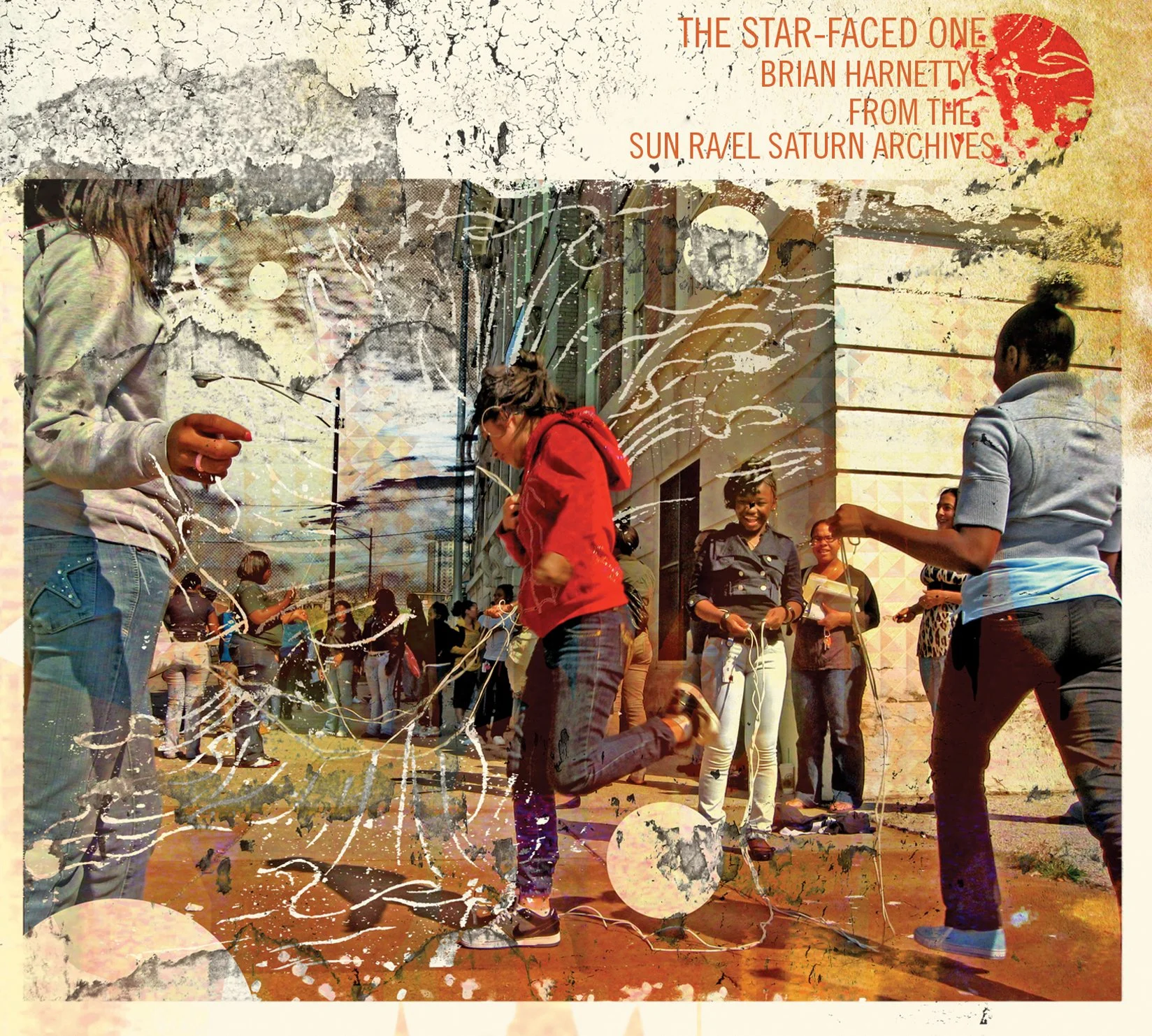
The Star-Faced One (both a 2-channel album, and a 6-channel sound Installation, 60 minute continuous loop, commissioned by Experimental Sound Studio). It was commissioned by and first shown at the Audible Gallery, Chicago, in 2010. A stereo album of the same name was released on Atavistic Records in 2013. The cover for the album is by artist and musician Damon Locks.
Six speakers are arranged in an arc, each independent of the others, yet also interconnected through sound. Sun Ra's voice emerges, reciting poetry through a telephone and onto a tape player and transferred once again to this room--Ra is still traveling through space and time to meet us as we listen. His voice is joined by others: members of the Arkestra, his own ensemble. It is also joined by another group of musicians, who are listening intently to the archival recordings and playing along with, or against, or independently. Through careful and thoughtful listening, and by doing so in solidarity with Ra, yet another layer of music is made. It does not take over, but rather sings side-by-side, allowing the past to be present, and pushing it into new futures.